

Quick Summary:
- Up to 40% of weight lost during a crash diet comes from muscle, not fat, and men over 40 lose lean tissue faster due to declining anabolic hormones and age-related anabolic resistance.
- Crash dieting drops testosterone by up to 15% and spikes cortisol, creating a hormonal environment that accelerates muscle loss and promotes fat storage, especially around the midsection.
- A moderate deficit of 500 calories per day, combined with 1.6-2.2 g of protein per kilogram of body weight and 3-4 resistance training sessions per week, preserves lean mass while delivering sustainable fat loss of 0.5-0.7 kg (1-1.5 lbs) per week.
- Why crash diets hit harder after 40
- The muscle loss numbers nobody talks about
- How extreme restriction wrecks your hormones
- Metabolic adaptation: the real reason diets fail
- What actually works for men over 40
- Crash diet vs sustainable approach: side-by-side comparison
- A practical 12-week plan that protects muscle
- Frequently asked questions
Every spring, the fitness industry rolls out the same playbook: slash your calories, do more cardio, and chase a “beach body” in 8 weeks. For men in their 20s, this aggressive approach might work. For a crash diet men over 40 attempt, the outcome is almost always the same: you lose weight on the scale, but a shocking amount of that weight is muscle, not fat.
I fell for this myself. After years of inconsistent training, I tried a rapid cut before a holiday, dropped 6 kg (13 lbs) in 5 weeks, and came back looking flatter, weaker, and somehow softer than before. It took my coach at the time to explain what had happened: I’d burned through lean tissue because I was eating too little protein, running too much, and lifting too infrequently. The scale had moved, but the mirror told a different story.
The research backs this up comprehensively. A crash diet after 40 doesn’t just fail, it actively damages your metabolism, your hormones, and the muscle mass that gets harder to rebuild with every passing year. Here’s what the science says, and what to do instead.
New: the FitnessForties Training App. 10 programs for men over 40, deload weeks built in, works with no signal. USD 10, once. See the app
Why crash diets hit harder after 40
The biology working against you is straightforward. Starting around age 30, testosterone declines by roughly 1-2% per year. By 45, most men have measurably lower anabolic hormone levels than they did at 25. This matters because testosterone is one of the primary signals your body uses to decide whether to preserve or break down muscle tissue during a caloric deficit.
On top of that, men over 40 face a phenomenon called anabolic resistance. Your muscles become less responsive to the protein you eat, meaning you need more protein per meal to trigger the same muscle-building response a younger man gets from a standard portion. Research published in the Journal of Aging and Physical Activity confirms that this resistance increases progressively from your 40s onward. The research on preserving healthy muscle during weight loss underscores how critical this factor becomes with age.
Combine declining hormones with anabolic resistance, and you get a body that is primed to sacrifice muscle when calories drop too low. A 25 year old on a crash diet might lose 20-25% of weight as lean tissue. For men over 40, that number climbs to 30-40%, according to data from the Proceedings of the National Academy of Sciences.
The practical implication is blunt: if you lose 8 kg (18 lbs) on an aggressive 1,200-calorie diet, roughly 3 kg (7 lbs) of that could be muscle. That’s muscle your body will struggle to rebuild, especially if you’re not resistance training.
The muscle loss numbers nobody talks about
A 2024 systematic review in Clinical Nutrition ESPEN examined muscle preservation during caloric restriction across multiple age groups. The findings were clear: adults who consumed standard protein intakes (0.8 g/kg per day) during energy restriction lost significantly more lean mass than those consuming 1.2-1.6 g/kg or higher. For older adults, the difference was even more pronounced.
Here’s what makes crash diets especially destructive. When your caloric deficit exceeds 750-1,000 calories per day, your body shifts into a conservation mode that prioritises fat storage and accelerates muscle breakdown. Energy deficits beyond 500 kcal per day have been shown to impair muscle protein synthesis directly, according to research on preserving lean mass during weight loss interventions.
The math is unforgiving. A man who weighs 90 kg (198 lbs) and drops to a 1,200-calorie intake is running a deficit of roughly 1,300-1,500 calories, well into the danger zone for muscle growth after 40. His body is essentially choosing between burning fat (a slow process) and breaking down muscle (a fast one). Under extreme restriction, muscle is the easier fuel source.
I’ve seen this pattern in men I train alongside. They start a pre-summer cut, lose scale weight rapidly, and within 4-6 weeks their lifts start collapsing. Bench press drops 15-20%, squat volume tanks, and the “lean look” they expected is replaced by a depleted, flat appearance. That’s not fat loss. That’s muscle catabolism.
How extreme restriction wrecks your hormones
The hormonal cascade triggered by a crash diet is well documented and particularly damaging for men who are already dealing with age-related hormonal decline.
Testosterone drops further. A study published in the Journal of Clinical Endocrinology & Metabolism found that long-term severe calorie restriction significantly reduces both total and free testosterone while increasing sex hormone-binding globulin (SHBG). For a man over 40 whose testosterone is already declining at 1-2% per year, an aggressive diet can accelerate that decline dramatically, compressing years of hormonal aging into weeks.
Cortisol spikes. Extreme caloric restriction elevates cortisol, the primary stress hormone. Research from a 2022 systematic review in Nutrition and Health showed that low-carbohydrate diets (a common crash-diet strategy) increase both resting and post-exercise cortisol levels. Elevated cortisol promotes visceral fat storage, the exact abdominal fat men over 40 are trying to lose. If you’re interested in the broader cortisol and stress management picture, that relationship is worth understanding in depth.
Thyroid function slows. Your thyroid regulates metabolic rate, and severe calorie restriction causes T3 (the active thyroid hormone) to drop. The result is a measurable slowdown in your basal metabolic rate, meaning you burn fewer calories at rest. For men over 40, where metabolic rate is already declining, this compounds the problem.
Leptin and ghrelin shift against you. Leptin (the satiety hormone) drops during calorie restriction, while ghrelin (the hunger hormone) increases. This creates an almost irresistible drive to overeat once the diet ends, which is exactly why 80-95% of crash dieters regain the weight within 12 months.
Metabolic adaptation: the real reason crash diets fail
There’s a persistent myth that your metabolism is “broken” or “damaged” after 40. It isn’t. But it has adapted, and understanding metabolism after 40 is essential before you start any fat loss phase.
Metabolic adaptation is your body’s survival mechanism. When you create a large caloric deficit, your body responds by reducing energy expenditure: you move less unconsciously (non-exercise activity thermogenesis drops), your body temperature decreases slightly, and your hormones shift to conserve energy. A 2024 study in Lifestyle Medicine showed that this adaptation can reduce your total daily energy expenditure by 10-15% beyond what the calorie deficit alone would predict.
For men over 40, this creates a vicious cycle. You cut calories aggressively, lose muscle, your metabolism slows both from the muscle loss and from adaptive thermogenesis, and then when you return to normal eating, your now-slower metabolism can’t handle the calories it used to. The result is rapid fat regain, often overshooting your starting weight.
This is the “rebound effect” that makes crash dieting after 40 a net negative. You end up with less muscle, a slower metabolism, disrupted hormones, and more body fat than when you started. Each crash diet cycle makes the next one harder, because you’ve traded metabolically active muscle tissue for metabolically inactive fat.
What actually works for a crash diet men over 40 should avoid
The alternative to a crash diet isn’t complicated, but it does require patience. A 2026 review in PMC identified resistance training as the single most important factor for preserving lean mass during a caloric deficit in adults with a mean age of 41. Not cardio. Not supplements. Resistance training.
Here are the 5 principles that the research consistently supports:
1. Keep your deficit moderate. Research in the Journal of the International Society of Sports Nutrition shows that a deficit of 500-750 calories per day (producing 0.5-0.7 kg or 1-1.5 lbs of weekly loss) preserves significantly more muscle than aggressive cuts. For most men over 40, this means eating 2,000-2,400 calories daily, not the 1,200-1,500 that crash diets demand.
2. Prioritise protein above everything else. The 2024 Clinical Nutrition ESPEN meta-analysis confirmed that protein intakes of 1.6-2.2 g per kilogram of body weight per day are essential for muscle retention during weight loss in older adults. For a 90 kg (198 lb) man, that’s 144-198 g of protein daily. Spread this across 3-4 meals with at least 30-40 g per sitting to overcome anabolic resistance. The best protein powders for men over 40 can help you hit those targets when whole food falls short.
3. Lift heavy, 3-4 times per week. Resistance training is non-negotiable during any fat loss phase. The 2026 research is unambiguous: the strength training group lost significantly less muscle mass than cardio-only and diet-only groups, who lost twice as much lean tissue. Focus on compound movements (squat, deadlift, bench press, row, overhead press) and maintain training intensity even as you reduce volume slightly. For a complete training framework, see the strength training for longevity guide.
4. Use cardio strategically, not desperately. Zone 2 cardio (60-70% of max heart rate) for 2-3 sessions per week supports fat oxidation without spiking cortisol or competing with recovery from resistance training. Rucking is one of the best options: it delivers Zone 2 work, builds lower body strength, and is easy on the joints.
5. Extend your timeline. Sustainable fat loss after 40 operates on a 12-24 week timeline, not a 4-week crash. When I did my body transformation with my coach, the structure was built around slow, steady progress: controlled deficit, high protein, progressive overload, and regular adjustments based on how my body was responding. The results took months, not weeks, but the muscle I kept (and built) stayed with me.
Crash diet vs sustainable approach: side-by-side comparison
The following table shows why moderate, sustained dieting outperforms crash cuts for men over 40, based on the research cited throughout this article.
| Factor | Crash diet (1,200 cal) | Sustainable cut (2,000-2,400 cal) |
|---|---|---|
| Weekly deficit | 1,000-1,500 cal/day | 500-750 cal/day |
| Weight loss rate | 1.0-1.5 kg (2-3 lbs)/week | 0.5-0.7 kg (1-1.5 lbs)/week |
| Muscle loss | 30-40% of total weight lost | 10-15% of total weight lost |
| Testosterone impact | Drops 10-15% | Minimal change |
| Cortisol | Significantly elevated | Moderately elevated |
| Metabolic adaptation | 10-15% metabolic slowdown | 3-5% metabolic slowdown |
| Regain rate (12 months) | 80-95% regain weight | 30-40% regain some weight |
| Sustainability | 4-8 weeks max | 12-24 weeks, repeatable |
| Net result after 6 months | Often heavier than start weight | 7-12 kg (15-26 lbs) fat loss, muscle preserved |
A practical 12-week plan that protects muscle
Here’s what a sustainable fat loss phase looks like for a man over 40 weighing approximately 90 kg (198 lbs). These are the same principles my transformation coach built my programme around, and they align with the 2024-2026 research.
Daily nutrition targets:
- Calories: 2,200-2,400 per day (creating a 500-600 calorie deficit)
- Protein: 160-200 g per day (1.8-2.2 g/kg), spread across 4 meals of 40-50 g each
- Carbohydrates: 180-220 g per day, prioritised around training sessions
- Fat: 60-80 g per day from nuts, olive oil, avocado, fatty fish
Training structure:
- Resistance training: 3-4 sessions per week, compound-focused (squat, deadlift, bench, row, press), maintaining load and reducing volume by 10-20% only if recovery is compromised
- Zone 2 cardio: 2-3 sessions per week, 30-45 minutes each (rucking, incline walking, cycling). Target heart rate: 60-70% of max HR
- Recovery: 7-8 hours of sleep per night (non-negotiable for hormone regulation). Sleep optimisation is arguably as important as the training itself
Progress tracking:
- Weigh yourself daily and track the 7-day average (daily fluctuations are meaningless)
- Take progress photos every 2 weeks in consistent lighting
- Track key lifts: if your strength is maintained, you’re keeping muscle
- Use a wearable fitness tracker to monitor HRV and resting heart rate for recovery status
- Adjust calories down by 100-150 every 3-4 weeks only if fat loss stalls for 2 consecutive weeks
Expected outcome over 12 weeks: 6-8 kg (13-18 lbs) of primarily fat loss, with 85-90% of muscle mass preserved. That’s a dramatically different result from the crash dieter who loses 6 kg in 4 weeks but sacrifices 2-3 kg of muscle in the process.
Frequently asked questions
How fast can men over 40 lose fat without losing muscle?
The research consistently points to 0.5-0.7 kg (1-1.5 lbs) per week as the sweet spot. This rate allows your body to mobilise fat stores while keeping muscle protein synthesis active, especially when combined with adequate protein intake (1.6-2.2 g/kg/day) and resistance training. Anything faster than 1 kg per week dramatically increases muscle loss risk.
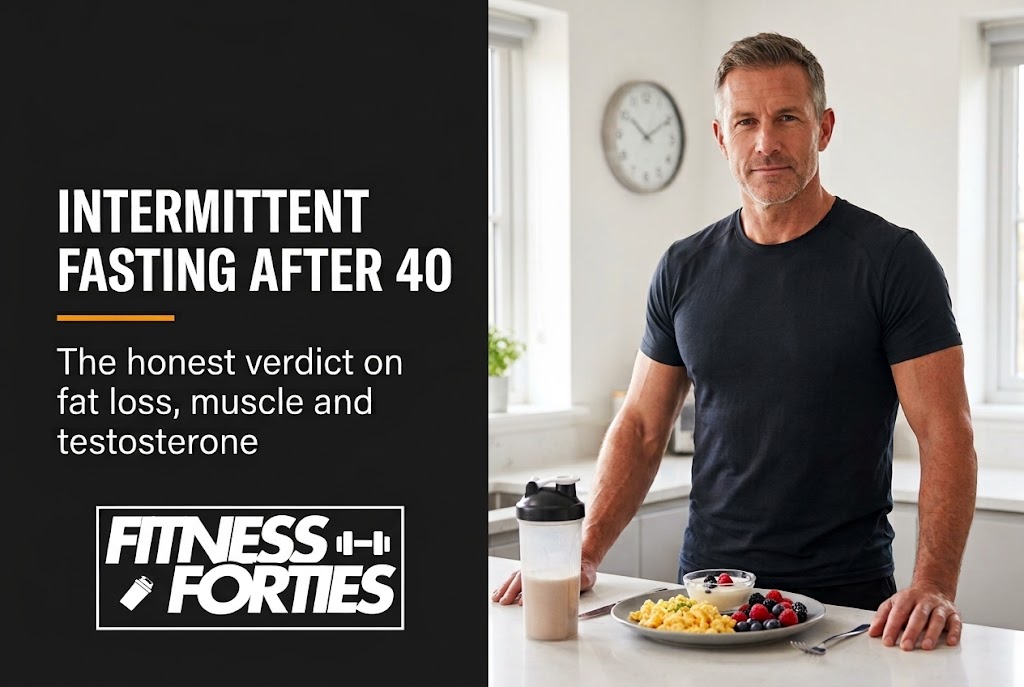
Is intermittent fasting a crash diet?
Not necessarily. Intermittent fasting (16:8 or similar) is a meal timing strategy, not inherently a caloric restriction method. If your total daily calories and protein remain adequate within your eating window, intermittent fasting can work fine for men over 40. The problem arises when fasting leads to under-eating, which often happens when you compress 2,200 calories into a 6-hour window.
Will a crash diet permanently damage my metabolism?
Not permanently, but the recovery is slow. Metabolic adaptation from severe restriction can persist for months after you resume normal eating. The bigger concern is the muscle you lose during the crash phase: rebuilding that muscle takes significantly longer than losing it did, especially after 40. Each crash diet cycle leaves you with less muscle and a slightly lower baseline metabolic rate.
How much protein do I really need during a cut?
The 2024 meta-analysis in Clinical Nutrition ESPEN confirms 1.6-2.2 g per kilogram of body weight per day as optimal for muscle preservation during energy restriction in older adults. For a 90 kg (198 lb) man, that’s 144-198 g daily. Spread it across 3-4 meals with at least 30-40 g per sitting to maximise muscle protein synthesis. A personalised nutrition approach can fine-tune this based on your training volume and goals.
Can I do a short crash diet and then switch to a sustainable plan?
This is tempting but counterproductive. Even 2-3 weeks of severe restriction is enough to elevate cortisol, suppress testosterone, and trigger metabolic adaptation. You’ll spend the next 4-6 weeks recovering from the hormonal disruption before your body is ready for productive fat loss again. Starting with the moderate approach from day one gets you further, faster, with none of the recovery cost.
Final thoughts
The fitness industry profits from urgency. “Get shredded in 6 weeks” sells better than “lose fat steadily over 4 months.” But for men over 40, chasing the crash diet shortcut guarantees the worst outcome: less muscle, slower metabolism, disrupted hormones, and a near-certain rebound. The proven approach to fat loss after 40 is built on patience, protein, and progressive resistance training.
Start with a 500-calorie daily deficit. Hit your protein target. Lift 3-4 times per week. Give it 12 weeks. That’s not a diet, it’s a system, and systems outlast every crash programme on the market.
References
- Heymsfield, S.B., et al. “Weight loss composition during calorie restriction.” Proceedings of the National Academy of Sciences, 2014. 111(36): E3782-E3789.
- Longland, T.M., et al. “Higher compared with lower dietary protein during an energy deficit combined with intense exercise promotes greater lean mass gain and fat mass loss.” American Journal of Clinical Nutrition, 2016. 103(3): 738-746.
- Whittaker, J. & Harris, M. “Low-carbohydrate diets and men’s cortisol and testosterone: Systematic review and meta-analysis.” Nutrition and Health, 2022. 28(4): 543-554.
- Fontana, L., et al. “Long-term effects of calorie restriction on serum sex hormone concentrations in men.” Aging Cell, 2013. 12(1): 73-75.
- Memelink, R.G., et al. “Long-term preservation of lean mass and sustained loss of fat mass after completion of an intensive lifestyle intervention.” Lifestyle Medicine, 2024. 5(2): e103.
- Enhanced protein intake on maintaining muscle mass, strength, and physical function in adults with overweight/obesity: A systematic review and meta-analysis. Clinical Nutrition ESPEN, 2024.
- Resistance training as a key strategy for high-quality weight loss in men and women. PMC, 2026.
- Jager, R., et al. “International Society of Sports Nutrition Position Stand: protein and exercise.” Journal of the International Society of Sports Nutrition, 2017. 14: 20.
Get my free body transformation blueprint
My Body Transformation Blueprint: the exact 4-phase framework I used to drop 14 kg (31 lb) of body fat as a busy man over 40. Enter your email and I will send you the PDF straight away.
No spam. Unsubscribe in one click. Privacy-first and GDPR compliant.



Leave a Reply