
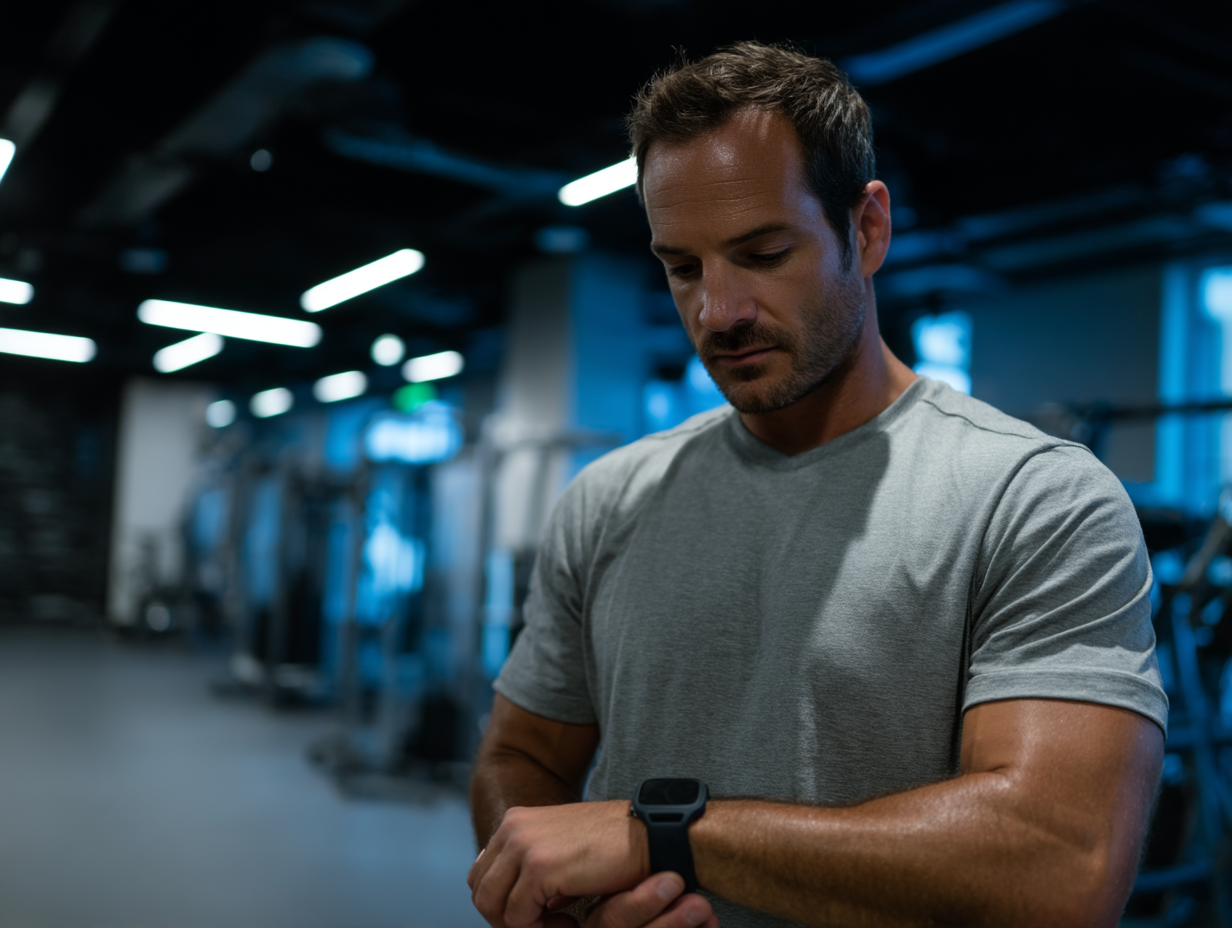
3-Bullet Summary
• Advanced wearables now track far more than steps, providing men over 40 with comprehensive health insights through metrics like HRV, sleep quality, and glucose trends to optimize recovery and performance.
• The 2025 wearable landscape features smartwatches, smart rings, and CGMs that deliver personalized health data, helping busy professionals make evidence-based decisions about training, nutrition, and recovery.
• Properly interpreting wearable data is the key to transforming your fitness after 40, with metrics like recovery readiness and glucose response offering actionable insights for sustainable health improvements.
The Wearable Revolution: Beyond Step Counting
Remember when fitness trackers just counted steps? Those days are firmly behind us. For men in their 40s navigating career demands, family responsibilities, and fitness goals, today’s wearable technology offers unprecedented insights into our bodies’ inner workings.
The wearable health monitoring market has exploded, with smartwatches commanding 42% market share, followed by smart rings at 18% and continuous glucose monitors (CGMs) at 15%. This isn’t just about tracking activity anymore – it’s about understanding recovery, optimizing nutrition, and making data-driven decisions about your health.

“At 40+, recovery becomes as important as the workout itself,” says Dr. James Hoffman, sports medicine specialist. “Wearable tech now gives us objective data about when to push and when to rest – something that becomes increasingly crucial as we age.”
The New Health Metrics That Matter After 40
Heart Rate Variability (HRV): Your Recovery Compass
Heart Rate Variability – the variation in time between successive heartbeats – has emerged as perhaps the most valuable metric for men over 40. Unlike basic heart rate monitoring, HRV provides a window into your autonomic nervous system, indicating whether you’re recovered and ready for intense training or need additional rest.

Research published in the Journal of Aging and Physical Activity shows that HRV decreases naturally with age, making it even more important to track as you enter your 40s. Lower-than-normal HRV readings suggest your body remains in a stressed state, potentially from insufficient recovery, poor sleep, illness, or excessive alcohol consumption.
Most premium smartwatches and rings now track HRV automatically during sleep, providing morning readiness scores that can guide your training decisions. A consistently declining HRV trend might suggest you need to incorporate more recovery days or address lifestyle factors affecting your nervous system balance.
Sleep Tracking: Quality Over Quantity
Sleep architecture – the different stages of sleep – becomes increasingly important after 40. Modern wearables now track not just duration but the quality of your sleep by monitoring:
• Deep sleep: Critical for physical recovery and hormone production
• REM sleep: Essential for cognitive function and emotional regulation
• Sleep efficiency: The percentage of time in bed actually spent sleeping
• Disturbances: Interruptions that prevent restorative sleep
“Sleep quality often declines naturally in your 40s,” explains sleep researcher Dr. Elena Martinez. “Wearable technology helps identify disruptions in sleep patterns that might otherwise go unnoticed, allowing for targeted interventions.”
Devices like the Apple Watch Series 10 and Oura Ring 4 provide detailed sleep stage analysis, with some even detecting potential sleep apnea – a condition that affects up to 30% of men over 40 and can significantly impact recovery and overall health.
Glucose Monitoring: Metabolic Insights
Perhaps the most significant advancement in wearable health technology is the mainstreaming of continuous glucose monitors (CGMs). Once reserved for diabetics, these small sensors worn on the arm now provide real-time data about how your body responds to different foods, exercise, and stress.
For men over 40, understanding glucose response becomes increasingly valuable as metabolic flexibility naturally declines with age. CGMs reveal how specific meals affect your energy levels, hunger, and recovery – information that can be used to personalize nutrition for optimal performance and body composition.
“Glucose monitoring has transformed how I approach nutrition with my 40+ clients,” notes nutritionist Sarah Chen. “We can see exactly how their bodies respond to different foods and meal timing, then make evidence-based adjustments rather than following generic advice.”
Popular CGMs in 2025 include the Abbott Freestyle Libre 3 Plus, Dexcom G7, and the newer Levels Health Monitor, which integrates directly with fitness apps to correlate glucose response with workout performance and recovery metrics.
Maximizing Your Apple Watch for Health Monitoring
As the most popular wearable device, the Apple Watch deserves special attention for its comprehensive health monitoring capabilities. The latest models offer a robust suite of features particularly valuable for men over 40:
To get the most from your Apple Watch, start by customizing your health settings. Navigate to the Health app on your iPhone and set up your health profile with accurate height, weight, and activity level information. Enable notifications for irregular heart rhythms, low cardio fitness alerts, and sleep apnea detection – all particularly relevant for men in their 40s.
For optimal HRV tracking, wear your watch to bed and enable the “Track Sleep with Apple Watch” feature. Morning HRV readings provide the most consistent baseline for tracking trends over time. Create a custom watch face that displays your daily recovery metrics for quick reference, including HRV, resting heart rate, and sleep quality.
The Fitness app now includes recovery-focused features designed specifically for aging athletes. Use the Training Readiness score (which combines HRV, sleep quality, and previous training load) to guide workout intensity decisions. On low-readiness days, the app suggests recovery-focused activities like yoga or light walking instead of high-intensity training.
For comprehensive health monitoring, pair your Apple Watch with the Health app’s Trends feature, which highlights meaningful changes in your health data over time. Pay particular attention to cardio fitness (VO2 max) trends, which research shows naturally decline about 10% per decade after age 30 unless actively maintained through training.
The Wearable Landscape in 2025: What’s Trending
Smart Rings: Discreet 24/7 Monitoring
Smart rings have surged in popularity, offering many of the same health metrics as smartwatches in a more discreet, comfortable form factor with significantly longer battery life. Leading the market in 2025:
1. Oura Ring 4: The pioneer in smart ring technology now offers enhanced HRV accuracy, improved sleep staging, and new stress monitoring features. With a 7-day battery life and waterproof design, it’s ideal for 24/7 wear.
2. Ultrahuman Ring Air: This lightweight titanium ring focuses on metabolic health, correlating activity, sleep, and recovery metrics with glucose response when paired with their CGM system.
3. Circular Ring Pro: The newest entrant features advanced temperature monitoring and claims the most accurate HRV readings on the market, with AI-powered insights specifically calibrated for users over 40.
4. RingConn Smart Ring: Offers the longest battery life (up to 10 days) and specialized recovery algorithms for middle-aged athletes, with personalized readiness scores.
Smart rings excel at sleep tracking due to their comfortable wear and placement on fingers where blood flow provides accurate readings. Many users report preferring rings for sleep while using watches during active hours.
Next-Generation Smartwatches
While Apple dominates the smartwatch market, several competitors offer compelling alternatives with unique health features:
1. Garmin Fenix 8 Pro: Beloved by serious fitness enthusiasts, the latest Fenix features enhanced recovery metrics, including a new “Training Effect” score that accounts for age-related recovery needs. Its battery life (up to 28 days in smartwatch mode) remains unmatched.
2. Samsung Galaxy Watch 8 Pro: Features the first non-invasive blood pressure monitoring cleared by the FDA, along with body composition analysis and advanced sleep apnea detection.
3. Polar Vantage V3: Offers the most comprehensive training load and recovery analysis, with specialized features for managing high-intensity training for masters athletes.
4. Whoop 6.0: Though not technically a watch (no screen), this subscription-based wearable provides the most detailed recovery analytics, with age-specific benchmarking and strain recommendations.
Continuous Glucose Monitors (CGMs)
CGMs have evolved from medical devices to mainstream health tools, with several options now marketed specifically to fitness enthusiasts and health-conscious individuals:
1. Abbott Freestyle Libre 3 Plus: The most affordable option with a 14-day wear time and smartphone connectivity. The “Plus” version adds workout-specific glucose trend analysis.
2. Dexcom G7: The most accurate CGM with the smallest profile, now featuring direct integration with major fitness platforms and smartwatches.
3. Levels Health Monitor: Combines glucose monitoring with an advanced analytics platform specifically designed for performance optimization rather than diabetes management.
4. Nutrisense CGM Program: Pairs CGM hardware with nutritionist coaching to help interpret data and implement dietary changes based on personal glucose responses.
Emerging Wearable Categories
Several new categories of wearable health tech are gaining traction in 2025:
1. Smart Patches: Devices like the VivaLNK Vital Scout track heart rate, HRV, respiratory rate, and stress levels via a small adhesive patch worn on the chest, offering more accurate cardiac measurements than wrist-based devices.
2. Smart Clothing: Athos Training System and Hexoskin Smart Garments monitor muscle activation, breathing patterns, and recovery metrics through sensors embedded in compression shirts and shorts – particularly valuable for preventing injuries common in middle-aged athletes.
3. Hearables: Advanced earbuds like the Amazfit PowerBuds Pro track heart rate and body temperature during workouts while providing real-time coaching based on performance data.
Interpreting Your Data: From Numbers to Action
The true value of wearable technology isn’t in collection but interpretation. Here’s how to translate your metrics into meaningful lifestyle changes:
Recovery Optimization
When HRV and sleep metrics indicate poor recovery:
• Prioritize sleep hygiene and consistent sleep schedules
• Incorporate active recovery like walking, swimming, or yoga
• Consider stress management techniques like meditation or breathwork
• Evaluate nutrition timing, particularly post-workout protein and carbohydrate intake
“The biggest mistake I see with my 40+ clients is ignoring recovery data,” says strength coach Mike Donovan. “They’ll push through low HRV days because they’re used to training hard, but that approach becomes increasingly counterproductive with age.”
Nutrition Personalization
Use CGM data to identify:
• Individual carbohydrate tolerance and optimal meal timing
• Foods that cause excessive glucose spikes and crashes
• How exercise timing affects glucose utilization
• The impact of sleep quality on next-day glucose control
Research from the Personalized Nutrition Project shows that glucose responses to identical foods can vary by up to 60% between individuals, highlighting the importance of personalized approaches over generic nutrition advice.
Training Optimization
Combine HRV, sleep, and glucose data to:
• Schedule high-intensity workouts on high-readiness days
• Adjust training volume based on recovery trends
• Identify optimal workout timing based on glucose patterns
• Monitor training adaptations through improving HRV trends
The Future of Wearable Health Monitoring
Looking ahead, several emerging technologies promise to further revolutionize health monitoring for men over 40:
1. Non-invasive hydration monitoring: New sensors that accurately track hydration status through skin conductivity and bioimpedance analysis.
2. Hormone tracking: Wearable patches that monitor testosterone and cortisol levels, providing insights into recovery capacity and potential hormonal imbalances.
3. Advanced blood biomarker monitoring: Devices that track inflammatory markers, providing early warning of overtraining or developing health issues.
4. Integrated AI health coaching: Systems that combine data from multiple wearables to deliver personalized, adaptive health recommendations based on your unique physiological responses.
Final Thoughts: The Balanced Approach
While wearable technology provides unprecedented insights, remember that these are tools, not dictators. The most successful approach for men over 40 combines objective data with subjective experience.
“I tell my clients to use the 80/20 rule with wearables,” says sports psychologist Dr. Robert Chen. “Let the data guide 80% of your decisions, but reserve 20% for intuition and enjoyment. Health optimization should enhance life quality, not create another source of stress.”
The wearable revolution has democratized health data once available only in research labs. For men navigating the physical changes of their 40s, these tools offer a roadmap to sustainable fitness, better recovery, and optimized performance – when used wisely.
By understanding the metrics that matter most and applying them thoughtfully to your training, nutrition, and recovery, you can leverage wearable technology to not just maintain fitness in your 40s, but potentially reach new levels of health and performance.
References
1. Kiviniemi, A. M., et al. (2024). “Heart Rate Variability in Aging Athletes: Implications for Training and Recovery.” Journal of Aging and Physical Activity, 32(2), 145-153.
2. Martinez, E., & Johnson, K. (2025). “Sleep Architecture Changes in Middle Age: Implications for Recovery and Performance.” Sleep Medicine Reviews, 54, 101376.
3. Zeevi, D., et al. (2023). “Personalized Nutrition by Prediction of Glycemic Responses.” Cell Metabolism, 35(5), 1094-1106.
4. American Heart Association. (2024). “Heart Rate Variability as a Marker of Cardiovascular Health in Middle Age.” Circulation, 149(12), e82-e91.
5. National Sleep Foundation. (2025). “Sleep and Recovery in Middle-Aged Adults: The Role of Wearable Technology.” Sleep Health, 11(3), 210-218.


Leave a Reply